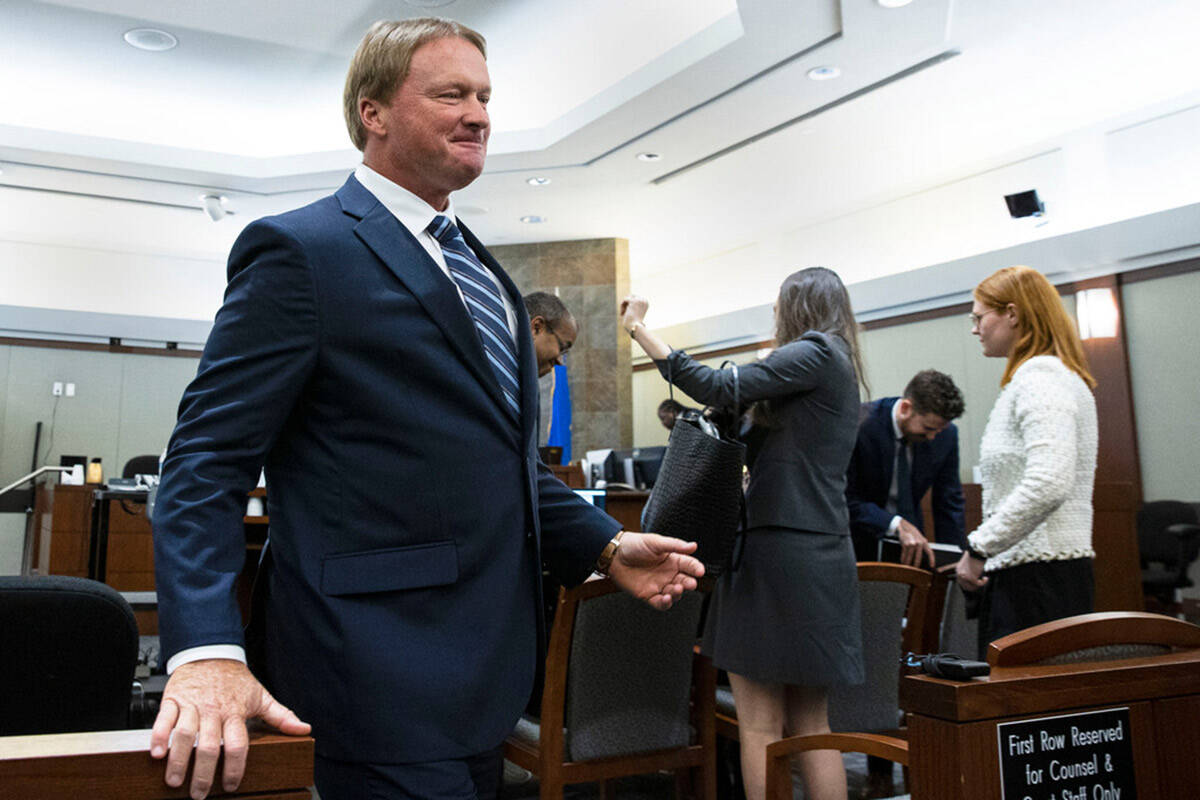
A Nevada judge has denied the NFL’s request to pause discovery in Jon Gruden’s lawsuit against the league, keeping the case on track for trial. District Judge Joe Hardy ruled Wednesday that the discovery process must proceed, rejecting the league’s argument that an appeal of an anti-SLAPP motion should automatically halt proceedings.
Gruden, the former Las Vegas Raiders head coach, sued the NFL and Commissioner Roger Goodell in 2021, alleging that the league leaked emails containing racist, misogynistic and anti-LGBTQ language and pressured the Raiders to fire him. He resigned after the emails became public.
The NFL had filed an anti-SLAPP motion to dismiss the case in 2025, years after the lawsuit began. Hardy previously denied that motion in December, calling it “without merit,” “not filed in good faith” and a “tactical misuse.” The league is appealing that decision.
During Wednesday’s hearing, NFL attorney William Marks argued that the anti-SLAPP statute requires a stay of discovery pending appeal. Hardy expressed skepticism, asking, “Under your argument, couldn’t anybody essentially, regardless of case, posture, procedure file an anti-SLAPP motion two years, three years into a case and then I automatically have to stay? That seems to be a little bit of a stretch.”
Gruden’s attorney Adam Hosmer-Henner accused the NFL of stalling. “The NFL defendants have felt things are not going well for a while now,” he said. He noted that lawmakers intended anti-SLAPP motions to be filed early to dismiss meritless cases, “not to have an anti-SLAPP motion filed four years too late.”
After the ruling, Hosmer-Henner said in an email, “We appreciate the Court’s decision and its clear direction to move the case forward.” Defense attorney Maximilien Fetaz declined to comment.
The judge indicated discovery will last 12 months, with a trial expected to run about four weeks. The case had previously been stalled at the Nevada Supreme Court over whether Gruden could be forced into arbitration. The high court ruled in August that he could not, sending the case back to the trial court.