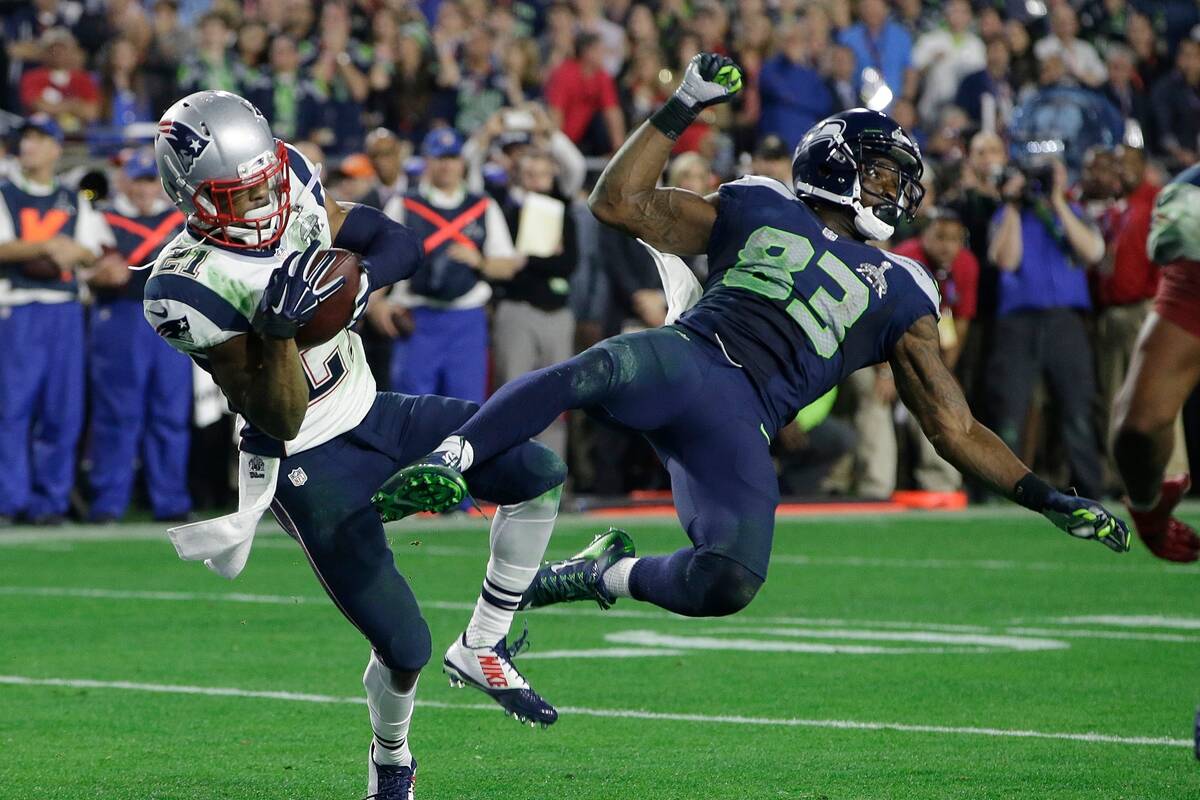
It has been 11 years since the Seattle Seahawks stood at the 1-yard line with the Super Bowl within reach. They had Marshawn Lynch in the backfield, a timeout in their pocket, and 26 seconds on the clock. Instead of handing the ball to their star running back, they called a pass. The result was an interception that handed the New England Patriots a 28-24 victory and forever changed the trajectory of both franchises.
Sunday’s Super Bowl LX matchup between the same two teams brings that moment back into focus. The Seahawks and Patriots haven’t met in the Super Bowl since that 2015 game at University of Phoenix Stadium in Glendale, Arizona, where 70,288 fans watched Seattle squander a 24-14 fourth-quarter lead.
Tom Brady threw four touchdowns and led the comeback, but the defining play came with 26 seconds left. On second-and-goal, Russell Wilson targeted Ricardo Lockette. Patriots rookie cornerback Malcolm Butler jumped the route and made the interception at the goal line, sealing New England’s fourth Lombardi Trophy.
“I told the guys in the locker room that they were on the precipice of winning a championship,” then-Seattle coach Pete Carroll said after the game. “Unfortunately, the play goes the other way. There is nobody to blame but me.”
Carroll, who later coached the Raiders to a 3-14 record in 2025 and was fired after one season, has acknowledged that he made the call. “We were going to run the ball to win that game, but not on that down,” he said. “I made the decision. I said, ‘Throw it.'”
The Patriots had two timeouts but chose not to use them, content to let the game rest on whether they could stop Lynch. They never had to find out. The interception made Brady a four-time champion, tying Joe Montana and Terry Bradshaw, and cemented his legacy as the greatest of all time after he also threw two interceptions earlier in the game.
“I’m a little surprised we (didn’t run),” Seahawks cornerback Richard Sherman said at the time. “It was an unfortunate play.”
Butler, reflecting on the play last week, told the Seattle Times: “(Wilson) threw the ball, and I caught it, but I felt like if the wide receiver would have ran the route harder, he would have given them another chance, but it didn’t happen. But I think (Wilson) made the right decision.”
Had Butler dropped the ball, perhaps Carroll would have handed it to Lynch on third down. Instead, the play stands as one of the most memorable in Super Bowl history—both for its brilliance and its questionable decision-making. Sunday’s rematch will need similar drama to match that 2015 classic.